Table of Contents
Introduction
Choosing the right technology stack for your project is critical to its success. With the rise of Headless CMS and Static Site Generators (SSGs), developers and businesses now have access to powerful tools for creating dynamic and high-performing websites. But how do these two technologies differ, and which one is the right choice for your needs?
In this blog, we will compare Headless CMS and SSGs, highlighting their unique features, benefits, and ideal use cases to help you make an informed decision. We will also explore how AI agents and workflow automation are transforming content management, enabling teams to automate repetitive tasks and focus on strategic initiatives.
What is a Headless CMS?
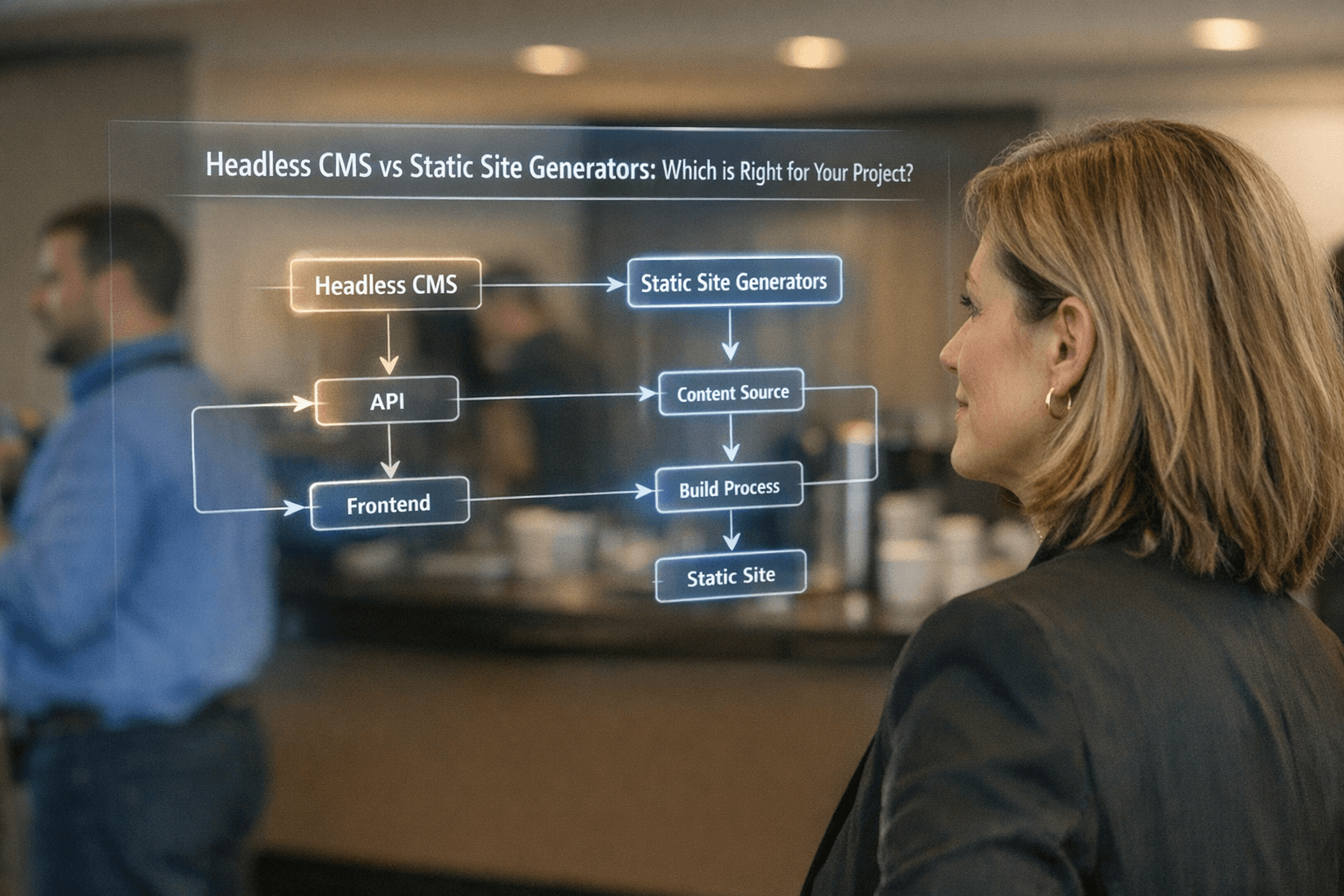
A Headless CMS is a content management system that decouples the backend content storage from the frontend presentation layer. Unlike traditional CMS platforms, a Headless CMS delivers content through APIs, allowing developers to design and deploy custom frontends across multiple platforms.
This architecture separates content management from content presentation, giving developers the freedom to choose any technology for displaying content. Think of it as removing the head from a traditional CMS body, leaving only the backend content repository that can serve content anywhere via APIs.
Key Features of Headless CMS
Content Agnostic: Provides content via APIs for any frontend framework or platform.
Multi-Channel Delivery: Enables content distribution across websites, mobile apps, IoT devices, and more.
Scalability: Easily handles large amounts of dynamic content and complex workflows.
Flexibility: Works seamlessly with modern frontend frameworks like React, Vue, and Angular.
AI Agent Integration: Modern platforms like Orbitype enable AI agents to access content data, automate publishing workflows, and optimize content delivery.
Benefits of Using a Headless CMS
Dynamic Content Updates: Content changes reflect instantly without rebuilding the entire site.
Customizable Frontends: Tailored user experiences with no constraints from predefined templates.
Enhanced Omnichannel Experiences: Seamless content delivery across various platforms and devices.
Workflow Automation: AI agents can monitor content changes, trigger automated workflows, and handle content distribution intelligently.
What is a Static Site Generator?
A Static Site Generator (SSG) generates static HTML files from templates and content. These files are pre-built and served directly to users, eliminating the need for a backend server during runtime. This approach delivers exceptional performance and security by serving pre-rendered content.
SSGs compile all content into static files during the build process, which are then deployed to CDNs for lightning-fast delivery. Popular SSGs include Gatsby, Hugo, Next.js (in static mode), and Eleventy.
Key Features of SSGs
Pre-Built Files: All content is compiled into static files during the build process.
Simplified Hosting: Deploy static files on CDNs for lightning-fast delivery worldwide.
Markdown Support: Often relies on Markdown files for content management and authoring.
Build-Time Rendering: Pages are generated at build time rather than on request.
Benefits of Using an SSG
High Performance: Static files load faster, ensuring a seamless user experience with minimal latency.
Better Security: No backend reduces vulnerabilities to attacks and eliminates common security risks.
Cost-Effective Hosting: Static files can be hosted on affordable CDNs without expensive server infrastructure.
Version Control: Content stored in files can be easily managed with Git and other version control systems.
Key Differences Between Headless CMS and SSGs
When comparing Headless CMS and Static Site Generators, the differences are distinct and significant depending on your project's goals. Understanding these differences helps you choose the right approach for your specific requirements.
Content Management Approach
Headless CMS platforms provide a user-friendly interface, enabling non-technical users to manage content with ease, making it ideal for teams that require real-time updates and omnichannel delivery. In contrast, SSGs require developers to manage content using code or Markdown files, focusing on performance and security.
Headless CMS: Offers dynamic content updates and supports multiple frontends with graphical editing interfaces.
SSGs: Limited to static content; updates require rebuilding the site, typically through code commits.
Performance and Speed
Performance is where SSGs truly shine. By serving pre-built static files directly via CDNs, SSGs ensure superior speed and minimal load times. Headless CMS platforms, while flexible, may experience slower response times when fetching real-time content from APIs.
Scalability and Complexity
On scalability, Headless CMS excels for large, complex applications that demand robust multi-channel delivery, while SSGs are better suited for smaller projects with minimal updates.
Headless CMS: Scales well for large, dynamic applications with multi-channel delivery and complex content workflows.
SSGs: Best for smaller, less complex projects with limited content updates and straightforward structures.
Developer Workflow and Team Collaboration
Developer workflow is another area of contrast. Headless CMS platforms allow non-developers to contribute seamlessly through graphical interfaces, fostering collaboration between technical and non-technical team members. In contrast, SSGs demand a developer-first approach, where managing static workflows and coding expertise are paramount.
AI Agents and Automation Potential
Modern Headless CMS platforms like Orbitype integrate AI agents that can automate content workflows, monitor changes, and optimize delivery. These AI agents have access to databases, APIs, and workflow automation tools, enabling intelligent content operations. SSGs, being file-based, have limited automation capabilities beyond build scripts.
Can Headless CMS and SSGs Work Together?
Yes, Headless CMS and SSGs can work together, offering a hybrid approach that combines the best of both worlds. A Headless CMS can act as the backend for managing dynamic content, while an SSG is used to pre-build and deploy static pages. This method ensures that websites benefit from the performance and security of static files while retaining the flexibility of dynamic content updates.
For example, you could use a Headless CMS like Orbitype to manage your content and pair it with an SSG like Gatsby or Hugo to generate and deploy your static files. This approach is particularly useful for projects requiring a mix of static and dynamic elements.
Workflow Automation with Hybrid Approach
When combining Headless CMS with SSGs, workflow automation becomes powerful. AI agents can monitor content changes in the Headless CMS, automatically trigger build processes for the SSG, and deploy updated static files to CDNs. This creates an intelligent content pipeline that delivers both speed and flexibility.
Orbitype, as an Agentic Cloud OS, takes this further by providing built-in workflow automation, AI agents, and serverless functions that can orchestrate the entire content-to-deployment pipeline. AI agents can analyze content performance, suggest optimizations, and even generate complementary content automatically.
Use Cases for Hybrid Approach
Marketing Websites: Static pages for performance with dynamic content sections managed through CMS.
E-Commerce Sites: Product catalogs managed in Headless CMS, static pages for category listings.
Documentation Sites: Static documentation with dynamic search and user-specific content.
Corporate Websites: Static pages for speed with dynamic news and blog sections.
Orbitype: The Agentic Cloud OS Advantage
Orbitype represents a new category in content management and business automation: the Agentic Cloud OS. Unlike traditional Headless CMS platforms, Orbitype combines PostgreSQL databases, S3 cloud storage, compute resources, workflow automation, and AI agents in a single integrated platform.
Beyond Traditional Headless CMS
While traditional Headless CMS platforms focus solely on content delivery through APIs, Orbitype enables you to build complete digital applications. You can create not just a CMS, but also CRM systems, ERP solutions, custom databases, and automated workflows, all within the same platform.
AI Agents as Your Virtual Workforce
Orbitype's AI agents have access to all your data and processes, enabling them to automate complex tasks that would typically require human intervention. These agents can:
Monitor content changes and automatically trigger publishing workflows
Analyze content performance and suggest optimizations
Generate complementary content based on existing materials
Manage multi-language content translation and localization
Integrate with third-party APIs and webhooks for extended functionality
Handle data synchronization between different systems automatically
Workflow Automation Without Limits
Orbitype's workflow automation goes beyond simple triggers. You can build sophisticated automation pipelines that connect content management with business processes, external APIs, and AI-powered analysis. This enables scenarios like automated SEO optimization, intelligent content distribution, and real-time performance monitoring.
No Vendor Lock-In
Unlike proprietary CMS solutions, Orbitype is built on open standards like PostgreSQL and S3-compatible storage. You maintain complete control over your data and can export everything at any time. This flexibility ensures that your content infrastructure remains future-proof and adaptable.
Choosing the Right Solution for Your Project
Choosing between a Headless CMS and a Static Site Generator depends on your project's specific needs. Understanding your requirements, team capabilities, and long-term goals is essential for making the right decision.
When to Choose a Headless CMS
A Headless CMS is ideal when your priority is dynamic content updates, multi-channel delivery, and scalability. Consider a Headless CMS if you need:
Real-time content updates without rebuilding your site
Content delivery across multiple platforms (web, mobile, IoT)
Non-technical team members to manage content independently
Complex content workflows with approval processes
AI-powered content automation and intelligent workflows
Integration with multiple third-party systems and APIs
When to Choose an SSG
An SSG might be a better fit if you value high performance, security, and a simple deployment process. Consider an SSG when:
Your content changes infrequently
Maximum performance and speed are critical
You have a technical team comfortable with code-based workflows
Security is paramount and you want to minimize attack surfaces
Hosting costs need to be minimized
Version control for content is important
When to Choose Orbitype
Orbitype is the right choice when you need more than just content management. Choose Orbitype when you want:
An integrated platform that combines CMS, database, and automation
AI agents to handle repetitive tasks and optimize workflows
Complete control over your data without vendor lock-in
The ability to build custom applications beyond content management
Workflow automation that connects content with business processes
A platform that scales from simple websites to complex enterprise applications
For many modern projects, combining both technologies offers an optimal solution, allowing you to harness their unique strengths. With platforms like Orbitype, you can orchestrate hybrid workflows that leverage both static generation and dynamic content delivery, all managed by intelligent AI agents.
Conclusion
Choosing between a Headless CMS and a Static Site Generator depends on your project's specific needs. If your priority is dynamic content updates, multi-channel delivery, and scalability, a Headless CMS is the ideal choice. However, if you value high performance, security, and a simple deployment process, an SSG might be a better fit.
The emergence of AI agents and workflow automation is transforming how we approach content management. Platforms like Orbitype demonstrate that the future lies not in choosing between CMS and SSG, but in creating intelligent systems that combine the best of both worlds with autonomous AI agents that handle repetitive tasks, optimize workflows, and enable teams to focus on strategic initiatives.
As an Agentic Cloud OS, Orbitype goes beyond traditional content management by providing an integrated platform where databases, storage, workflows, and AI agents work together seamlessly. This approach eliminates vendor lock-in, provides complete data control, and enables you to build any digital application you need, from simple websites to complex enterprise systems.
Whether you choose a pure Headless CMS, an SSG, or a hybrid approach with Orbitype, the key is to select a solution that aligns with your team's capabilities, your content requirements, and your long-term business goals. The right choice will empower your team to create exceptional digital experiences efficiently and scale confidently as your needs evolve.
Ready to Build Smarter?
Discover how Orbitype's Agentic Cloud OS can transform your content management and business automation. With AI agents, workflow automation, and complete data control, you can build any digital application without vendor lock-in.
Get Started Today
Discover Orbitype: Visit Our Website
Try for Free: Register Here
Join Our Community: Orbitype Discord
Watch Tutorials: YouTube Channel
Explore Related Topics
Learn more about content management and digital transformation:
Jamstack Architecture - Discover the architectural approach that decouples web experiences
Modern Web Deployment - Explore modern deployment strategies for web applications