Multi-Agent Systems 2026: How to Build Collaborative AI Teams That Actually Work Together
The evolution from single AI agents to multi-agent systems represents the most significant shift in enterprise automation since the introduction of cloud computing. While individual AI agents can handle specific tasks with impressive efficiency, the real transformation happens when specialized agents collaborate as a coordinated team to solve complex business challenges.
In 2026, enterprises are moving beyond isolated automation tools toward collaborative AI ecosystems where multiple agents share context, delegate tasks, and coordinate actions across entire workflows. This architectural shift enables organizations to automate processes that were previously too complex for single-agent solutions.
This comprehensive guide explores how to design, implement, and scale multi-agent systems that deliver measurable business value. From architecture patterns and communication protocols to real-world implementations and performance optimization strategies, you will discover proven approaches for building AI teams that work together seamlessly.
What Are Multi-Agent Systems and Why Do They Matter?
A multi-agent system is a distributed architecture where multiple autonomous AI agents collaborate to achieve goals that exceed the capabilities of any single agent. Unlike traditional monolithic applications, multi-agent systems embrace three fundamental principles that enable sophisticated automation:
- Decentralized Control: No single master agent controls the entire system. Each agent makes independent decisions based on its specialized knowledge and local context, similar to how team members in high-performing organizations operate with autonomy within their domains.
- Local Views with Global Impact: Individual agents perceive and react to their immediate environment without requiring complete system visibility. This design pattern reduces complexity and enables scalable architectures where agents can be added or removed without system-wide reconfiguration.
- Emergent Behavior: Complex, intelligent outcomes emerge from simple agent interactions. When specialized agents coordinate effectively, they solve problems that would be intractable for single-agent architectures.
According to AWS research on multi-agent collaboration, systems using coordinated agent teams show marked improvements in task success rates and accuracy compared to single-agent implementations for complex, multi-step workflows.
The business case for multi-agent systems becomes clear when examining enterprise automation challenges. Single agents struggle with tasks requiring diverse expertise, parallel processing of independent subtasks, or coordination across multiple business domains. Multi-agent architectures solve these limitations by enabling specialization, parallel execution, and coordinated decision-making.
How Do Multi-Agent Systems Communicate and Coordinate?
Effective communication between agents forms the foundation of successful multi-agent systems. Modern implementations leverage three primary communication mechanisms, each suited to different coordination patterns:
Shared Memory and Context Systems
Shared memory architectures enable agents to access a common knowledge base where they can read and write information. This pattern works similarly to a collaborative workspace where team members update shared documents. RAG systems serve as the backbone for shared memory implementations, providing semantic search capabilities across unified knowledge repositories.
In practice, a research agent might extract key insights from documents and store them in the shared context. A content creation agent then accesses these insights to generate marketing materials, while a quality control agent validates outputs against brand guidelines stored in the same system.
Message-Based Communication Protocols
Asynchronous message passing enables agents to communicate without tight coupling. Message queues and event-driven architectures allow agents to publish events, subscribe to relevant information streams, and process messages independently. This approach scales effectively for distributed systems where agents may operate on different infrastructure or time scales.
According to IBM research on multi-agent collaboration, message-based protocols support both explicit communication through structured messages and implicit coordination through shared environment modifications.
Direct Agent-to-Agent Invocation
Some scenarios require synchronous communication where one agent directly calls another as a specialized service. This pattern resembles microservices architecture where agents expose APIs that other agents consume. A primary analysis agent might invoke a specialized calculation agent whenever precise mathematical operations are required, receiving immediate results to continue its workflow.
The choice of communication mechanism depends on your specific requirements for latency, consistency, and coupling. High-performance systems often combine multiple approaches, using shared memory for context, messages for coordination, and direct invocation for critical path operations.
Which Architecture Patterns Enable Effective Multi-Agent Collaboration?
Choosing the right architecture pattern determines whether your multi-agent system scales gracefully or becomes an unmaintainable tangle of dependencies. Three proven patterns have emerged as standards for enterprise implementations:
Hierarchical Supervisor Architecture
In hierarchical systems, a supervisor agent coordinates specialized sub-agents, breaking down complex requests into manageable tasks and delegating them appropriately. This pattern mirrors organizational structures where managers oversee specialized teams. The supervisor maintains the overall workflow state, handles error recovery, and consolidates outputs from sub-agents into coherent results.
Google's Agent Development Kit implements this pattern through parent-child relationships where each agent can manage multiple sub-agents but reports to only one parent. This clear chain of command simplifies debugging and ensures predictable data flow throughout the system.
Peer-to-Peer Collaborative Networks
Peer-to-peer architectures enable direct agent-to-agent communication without central coordination. Agents discover each other's capabilities, negotiate task allocation, and collaborate dynamically based on current workload and expertise. This pattern excels in scenarios requiring high availability and fault tolerance since no single point of failure exists.
Implementation requires robust service discovery mechanisms and consensus protocols for conflict resolution. While more complex to implement than hierarchical systems, peer-to-peer networks offer superior scalability for large agent populations.
Marketplace and Service-Oriented Patterns
Marketplace architectures treat agents as service providers that advertise their capabilities and consume services from other agents. A central registry maintains agent capabilities and handles service discovery, but execution remains decentralized. This pattern combines the scalability of peer-to-peer systems with the manageability of hierarchical approaches.
Orbitype's Agentic Cloud OS implements a hybrid approach where agents operate within shared environments that provide managed databases, workflows, and APIs. This architectural foundation enables agents to coordinate through multiple mechanisms while maintaining clear operational boundaries.
How Can Organizations Implement Multi-Agent Workflows?
Translating multi-agent architecture into operational workflows requires orchestration patterns that manage task execution, data flow, and error handling. Three fundamental workflow patterns form the building blocks of complex multi-agent systems:
Sequential Agent Pipelines
Sequential workflows execute agents in a predefined order, passing outputs from one agent as inputs to the next. This pattern suits processes with clear dependencies where each step builds on previous results. A content production pipeline might sequence a research agent, writing agent, editing agent, and publishing agent to create and distribute articles automatically.
Implementation requires careful attention to data transformation between agents. Each agent must produce outputs in formats consumable by downstream agents, necessitating clear interface contracts and validation logic.
Parallel Agent Execution
Parallel workflows enable multiple agents to work simultaneously on independent subtasks. When a customer inquiry arrives, separate agents might simultaneously check inventory, verify customer history, and calculate pricing before a coordinator agent synthesizes their outputs into a comprehensive response.
This pattern dramatically reduces total processing time for workflows with independent operations. However, it requires robust synchronization mechanisms to handle cases where parallel agents complete at different times or encounter errors.
Conditional and Loop-Based Orchestration
Advanced workflows incorporate conditional logic and iterative processing. A quality assurance workflow might loop through content review cycles until quality thresholds are met, with different agents activated based on detected issues. Conditional branching enables agents to adapt workflows dynamically based on intermediate results.
According to enterprise automation research, combining these patterns enables organizations to automate end-to-end processes that previously required extensive manual coordination. The key lies in designing workflows that balance automation with appropriate human oversight for critical decisions.
What Real-World Use Cases Benefit Most from Multi-Agent Systems?
Multi-agent systems deliver the greatest value in scenarios requiring coordination across multiple domains of expertise, parallel processing of complex workflows, or adaptive decision-making based on diverse data sources. Here are proven enterprise applications:
Customer Service and Support Operations
Modern customer service implementations deploy agent teams where a triage agent classifies incoming requests, routing them to specialized agents for technical support, billing inquiries, or product questions. A knowledge base agent provides relevant documentation while a sentiment analysis agent monitors conversation tone, escalating to human agents when frustration is detected. This orchestrated approach reduces resolution time while maintaining service quality.
Content Marketing and Social Media Management
Marketing teams leverage multi-agent systems to automate content workflows from research through publication. A research agent monitors industry trends and competitor activities, feeding insights to a content strategy agent that plans editorial calendars. Writing agents generate drafts while SEO optimization agents ensure search visibility. Finally, distribution agents schedule posts across platforms and engagement agents respond to audience interactions.
Sales Pipeline and Lead Management
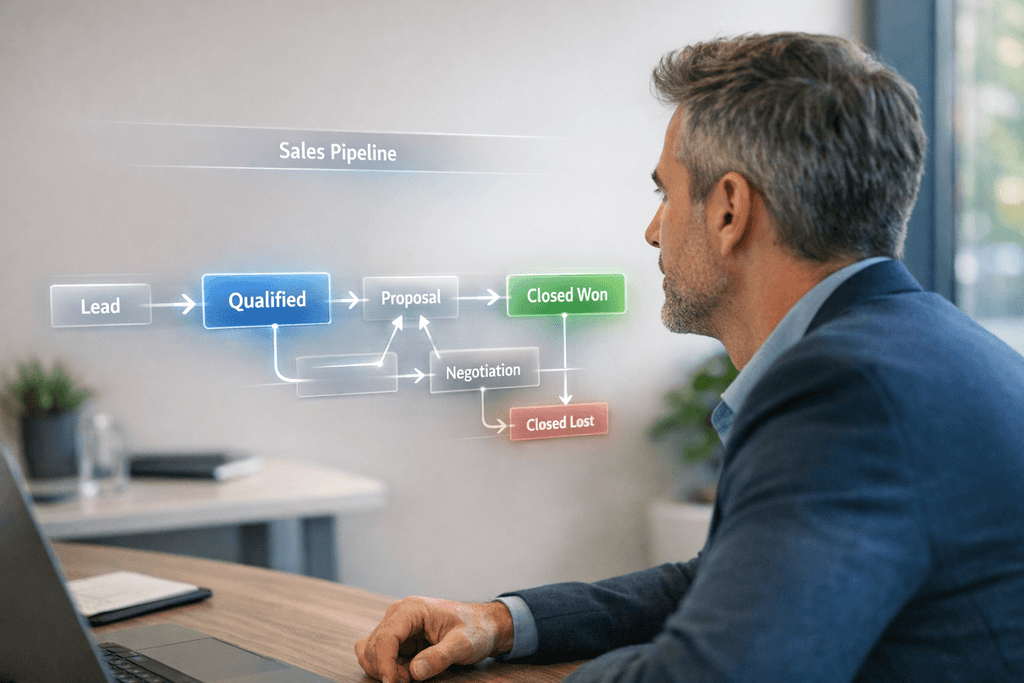
Sales automation benefits from agent teams that handle lead qualification, outreach, and follow-up coordination. A prospecting agent identifies potential customers through web research and database queries. An enrichment agent gathers detailed company information and decision-maker contacts. Outreach agents craft personalized messages while a scheduling agent coordinates meetings. A CRM agent maintains data consistency across systems, ensuring sales teams have current information.
Financial Analysis and Compliance
Financial institutions deploy multi-agent systems for complex analysis requiring diverse expertise. A data collection agent aggregates information from multiple sources while specialized analysis agents evaluate risk, forecast trends, and identify anomalies. A compliance agent validates all recommendations against regulatory requirements before a reporting agent generates executive summaries. This coordinated approach ensures thorough analysis while maintaining audit trails.
How Do You Handle Conflict Resolution in Multi-Agent Systems?
When multiple agents analyze the same situation, conflicting recommendations inevitably emerge. Robust multi-agent systems implement structured conflict resolution mechanisms that balance automation with appropriate oversight:
Confidence Scoring and Weighted Decisions
Each agent can provide confidence scores alongside recommendations, enabling systems to weight decisions based on agent expertise and certainty. When a pricing agent suggests a 20 percent discount with 95 percent confidence while a margin protection agent recommends 10 percent with 60 percent confidence, the system can favor the higher-confidence recommendation or trigger human review for close calls.
Voting and Consensus Mechanisms
For decisions requiring multiple perspectives, voting protocols enable democratic resolution. Three fraud detection agents might analyze a transaction, with the majority vote determining the outcome. More sophisticated implementations use weighted voting where specialized agents have stronger influence in their domains of expertise.
Hierarchical Escalation Patterns
Complex conflicts escalate through agent hierarchies until reaching an agent with sufficient authority to decide. A supervisor agent might resolve disagreements between peer agents by considering broader context unavailable to specialists. For critical decisions, escalation paths can route conflicts to human decision-makers with full audit trails of agent recommendations.
Rule-Based Arbitration
Predefined business rules provide deterministic conflict resolution for common scenarios. If a compliance agent flags a recommendation, that veto might override all other agent inputs regardless of confidence scores. These rules encode organizational policies and regulatory requirements that must take precedence over optimization objectives.
Effective conflict resolution requires logging all agent inputs and decision rationale. This transparency enables continuous improvement as teams analyze resolution patterns and refine agent instructions or arbitration rules based on outcomes.
What Performance Optimization Strategies Scale Multi-Agent Systems?
As multi-agent systems grow in complexity and scale, performance optimization becomes critical for maintaining responsiveness and controlling costs. Enterprise implementations leverage several proven strategies:
Intelligent Caching and Memory Management
Multi-tier caching dramatically improves response times for repeated operations. In-memory caches store frequently accessed data with millisecond latency, while distributed caches like Redis provide shared state across agent instances. For RAG systems, vector caching eliminates redundant embedding calculations, reducing both latency and LLM API costs by up to 70 percent for common queries.
Parallel Execution and Load Balancing
Distributing agent workloads across multiple instances enables horizontal scaling. Load balancers route requests to available agent instances while health checks ensure failed agents are removed from rotation. For workflows with independent subtasks, parallel execution reduces total processing time proportionally to available compute resources.
Container orchestration platforms like Kubernetes automate scaling based on workload metrics, spinning up additional agent instances during peak demand and scaling down during quiet periods to optimize infrastructure costs.
Model Optimization and Inference Acceleration
Optimizing the AI models underlying agents yields substantial performance gains. Techniques like model quantization reduce model size and inference time with minimal accuracy loss. Knowledge distillation creates smaller, faster models that maintain performance for specific tasks. For production deployments, specialized inference servers like NVIDIA Triton optimize GPU utilization and batch processing.
Asynchronous Processing and Queue Management
Decoupling time-consuming operations from request-response cycles maintains system responsiveness. Message queues buffer work for agent processing, enabling systems to handle traffic spikes without degradation. Background workers process queued tasks asynchronously, with status updates provided through callbacks or polling mechanisms.
Monitoring and observability tools track agent performance metrics, identifying bottlenecks and optimization opportunities. Distributed tracing reveals latency sources across multi-agent workflows, enabling targeted optimization of the slowest components.
How Should Organizations Approach Security and Governance?
Multi-agent systems introduce unique security and governance challenges that require thoughtful architectural decisions and operational controls. Enterprise deployments must address several critical concerns:
Access Control and Permission Management
Fine-grained access controls ensure agents operate within appropriate boundaries. Role-based permissions define which data sources agents can access, which actions they can perform, and which other agents they can invoke. Environment isolation prevents agents from different business units or security contexts from accessing each other's data or workflows.
API key rotation and secrets management protect credentials used by agents to access external services. Centralized secret stores like HashiCorp Vault or cloud provider secret managers ensure credentials are never hardcoded in agent configurations.
Audit Trails and Compliance
Comprehensive logging captures all agent actions, decisions, and data access for compliance and debugging. Immutable audit logs record who initiated each workflow, which agents participated, what data was accessed, and what decisions were made. This transparency proves essential for regulatory compliance in industries like finance and healthcare.
Data lineage tracking shows how information flows through multi-agent workflows, enabling organizations to understand data transformations and validate compliance with privacy regulations like GDPR.
Input Validation and Output Filtering
Robust input validation prevents injection attacks and malformed data from compromising agent behavior. Output filtering ensures agents cannot leak sensitive information or generate harmful content. Guardrails validate agent outputs against organizational policies before execution, providing a safety layer for autonomous operations.
Monitoring and Anomaly Detection
Real-time monitoring tracks agent behavior patterns, flagging anomalies that might indicate security issues or system malfunctions. Rate limiting prevents runaway agents from consuming excessive resources or making too many API calls. Circuit breakers halt agent operations when error rates exceed thresholds, preventing cascading failures.
Organizations should implement graduated rollout strategies, testing multi-agent systems in controlled environments before production deployment. Human-in-the-loop patterns maintain oversight for high-stakes decisions while enabling automation for routine operations.
What Does the Future Hold for Multi-Agent Systems?
The trajectory of multi-agent systems points toward increasingly sophisticated collaboration patterns and autonomous capabilities that will fundamentally reshape enterprise operations:
Self-Organizing Agent Ecosystems
Future multi-agent systems will dynamically spawn specialized agents as needed rather than relying on predefined agent teams. When encountering unfamiliar tasks, coordinator agents will analyze requirements, create purpose-built agents with appropriate capabilities, and dissolve them after task completion. This elastic approach optimizes resource utilization while maintaining flexibility.
Cross-Enterprise Agent Collaboration
Standardized communication protocols will enable agents from different organizations to collaborate securely. Supply chain agents from manufacturers, distributors, and retailers will coordinate inventory and logistics autonomously. Financial agents will negotiate terms and execute transactions across organizational boundaries with appropriate governance and audit trails.
Continuous Learning and Adaptation
Advanced multi-agent systems will learn from every interaction, continuously improving their coordination strategies and decision quality. Reinforcement learning enables agents to optimize collaboration patterns based on outcomes, while transfer learning allows successful strategies to propagate across agent populations.
Multimodal Agent Capabilities
Integration of vision, language, and structured data processing in unified agent frameworks enables richer understanding and more sophisticated automation. Agents will analyze documents, interpret images, and synthesize insights across modalities to handle tasks requiring human-like perception and reasoning.
The democratization of multi-agent development through platforms like Orbitype's Agentic Cloud OS will accelerate adoption beyond technical teams. Business users will compose agent workflows through conversational interfaces while the platform handles technical complexity like scaling, security, and integration.
Organizations investing in multi-agent capabilities today position themselves to capitalize on these emerging trends, building institutional knowledge and technical foundations that compound over time.
Conclusion: Building Multi-Agent Systems That Deliver Business Value
Multi-agent systems represent a fundamental evolution in enterprise automation, moving beyond isolated AI capabilities toward coordinated intelligence that mirrors how high-performing human teams operate. The organizations achieving the greatest success with multi-agent implementations share common approaches:
They start with clearly defined use cases where coordination across multiple domains of expertise delivers measurable value. Rather than attempting to automate entire business processes immediately, they identify workflows where agent collaboration solves specific pain points and build from there.
Successful implementations prioritize robust communication and coordination mechanisms over individual agent sophistication. A well-orchestrated team of moderately capable agents consistently outperforms brilliant but poorly coordinated specialists.
They invest in shared infrastructure that enables agents to collaborate effectively. Unified knowledge bases, standardized communication protocols, and consistent monitoring provide the foundation for scalable multi-agent ecosystems. Platforms like Orbitype abstract this complexity, allowing teams to focus on business logic rather than infrastructure management.
Organizations treat multi-agent systems as evolving capabilities rather than one-time implementations. They establish feedback loops that capture performance metrics, analyze collaboration patterns, and continuously refine agent instructions and orchestration logic based on real-world outcomes.
The path to multi-agent maturity begins with experimentation on contained workflows, expands through proven patterns, and scales as organizational capabilities grow. Teams that embrace this journey today build competitive advantages that compound as multi-agent technologies continue advancing.
The future belongs to organizations that master coordination between specialized AI agents, creating adaptive systems that learn, scale, and deliver value across every dimension of their operations.