Table of Contents
AI Agent Orchestration 2025: How Multi-Agent Systems Replace Traditional Workflow Automation
The enterprise automation landscape is experiencing a fundamental transformation. While traditional workflow automation platforms like Zapier, Make, and n8n have served businesses well for years, they are increasingly showing their limitations in handling complex, dynamic business processes. Enter AI agent orchestration – a paradigm shift that replaces rigid, predetermined workflows with intelligent, self-organizing multi-agent systems capable of autonomous decision-making and real-time adaptation.
According to recent industry research, 93% of IT leaders plan to introduce autonomous agents within the next two years, with organizations deploying AI agents reporting productivity gains of 39% or more. Some teams have experienced productivity increases exceeding 100%, fundamentally changing how enterprises approach automation.
Unlike traditional automation that follows static "if-this-then-that" logic, AI agent orchestration enables dynamic, context-aware systems where multiple specialized agents collaborate to achieve complex business objectives. This article explores how multi-agent systems are revolutionizing enterprise automation, the architectural patterns that make them effective, and practical implementation strategies for organizations ready to move beyond traditional workflow tools.
What Makes Multi-Agent Orchestration Different from Traditional Automation?
Traditional workflow automation operates on predetermined, sequential logic. When a trigger event occurs, the system executes a predefined series of actions in a fixed order. This approach works well for simple, repetitive tasks but breaks down when faced with complexity, exceptions, or changing business conditions.
Multi-agent orchestration fundamentally reimagines this model. Instead of a single automation following a rigid script, multiple specialized AI agents work collaboratively, each with distinct capabilities and decision-making authority. These agents can:
- Perceive their environment by monitoring data streams, APIs, and system events
- Reason about observations using machine learning models and business logic
- Take autonomous actions across enterprise systems without human intervention
- Communicate and coordinate with other agents to solve complex problems
- Adapt their behavior based on outcomes and changing conditions
The key distinction lies in autonomous decision-making versus deterministic execution. While traditional automation requires humans to define every possible scenario and response path, multi-agent systems can handle novel situations by applying learned patterns and collaborative problem-solving.
According to IBM's research on AI agent orchestration, these systems enable organizations to shift from 20-30% automation coverage with traditional tools to 80% or higher with multi-agent approaches. The remaining 20% typically involves strategic decisions that genuinely require human judgment, rather than system limitations forcing human intervention.
How Does Multi-Agent Architecture Actually Work?
Understanding multi-agent architecture requires examining the core components that enable intelligent collaboration. At the foundation are specialized AI agents – autonomous software entities designed for specific functions such as data analysis, natural language processing, decision-making, or process execution.
Each agent combines three essential capabilities:
- Perception: Gathering data from multiple sources including APIs, event streams, databases, and IoT sensors
- Reasoning: Processing information using techniques ranging from rule-based logic to advanced machine learning models
- Action: Executing decisions through system integrations, workflow triggers, notifications, or resource creation
The orchestration layer coordinates these agents, managing task distribution, conflict resolution, and workflow synchronization. Modern orchestration systems support multiple architectural patterns:
Centralized Orchestration: A single orchestrator agent directs all other agents, providing tight control and predictable workflows. This model ensures consistency but can create bottlenecks in large-scale systems.
Hierarchical Orchestration: Multi-tiered structures where top-level orchestrators delegate to intermediate agents or sub-orchestrators. This improves scalability while maintaining strategic oversight.
Decentralized Orchestration: Agents communicate directly and make independent decisions through consensus mechanisms. This approach enhances resilience since no single point of failure can disrupt the entire system.
Adaptive Orchestration: Agents dynamically adjust roles, workflows, and priorities as conditions change, enabling real-time responsiveness without predefined static plans.
Communication between agents relies on standardized protocols and semantic frameworks. Modern enterprise implementations typically use API-based communication through RESTful APIs and GraphQL, combined with event-driven messaging via platforms like Kafka, RabbitMQ, or AWS EventBridge for asynchronous, scalable interactions.
What Are the Real-World Business Applications?
Multi-agent orchestration delivers transformative value across diverse business functions. Understanding practical applications helps organizations identify high-impact implementation opportunities.
Customer Service Automation: Multi-agent systems coordinate specialized agents for ticket routing, knowledge retrieval, and response generation. A routing agent analyzes incoming requests and assigns them to appropriate specialist agents based on topic, urgency, and customer history. Knowledge agents access documentation and previous interactions to provide context, while communication agents craft personalized responses. Organizations implementing this approach achieve 80% autonomous resolution rates while maintaining quality and compliance standards.
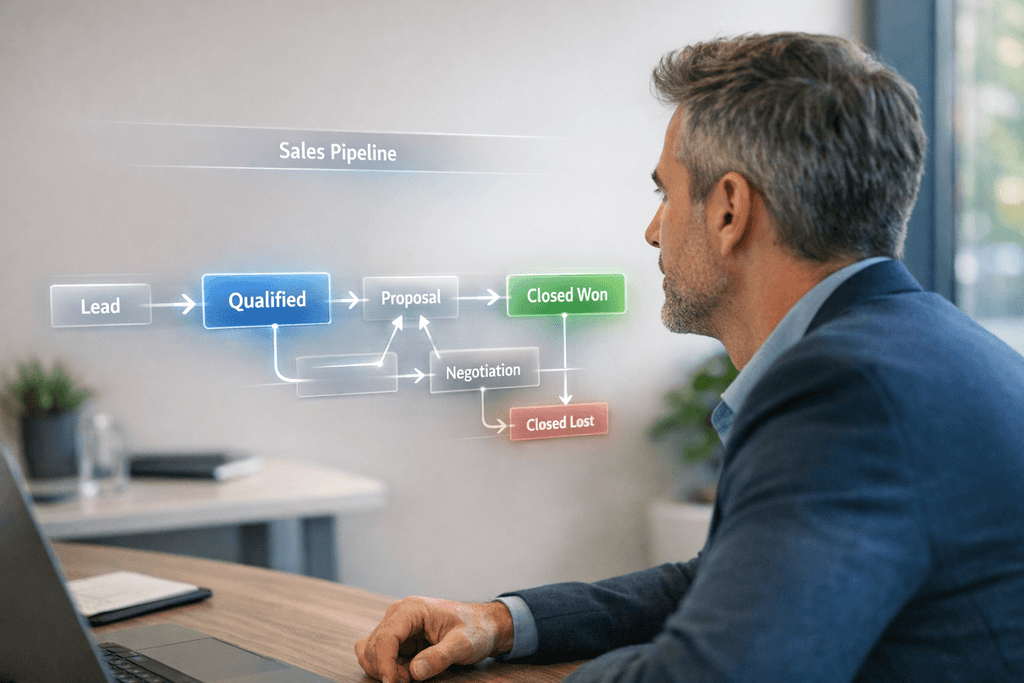
Sales Pipeline Orchestration: Lead qualification agents analyze prospect data from multiple sources, scoring opportunities based on firmographic and behavioral signals. Research agents autonomously gather competitive intelligence and company information through web crawling and API integrations. Outreach agents craft hyper-personalized messages adapted to prospect context, while follow-up agents manage multi-touch sequences across email, LinkedIn, and other channels. Companies report 9.7% increases in new sales calls and significant improvements in conversion rates.
Financial Operations: Document processing agents use OCR to extract data from invoices, purchase orders, and receipts. Validation agents cross-reference information against databases and business rules to identify discrepancies. Reporting agents connect to accounting systems, generate visualizations, and distribute insights to stakeholders. This reduces report generation from hours to minutes while ensuring consistency and accuracy.
Supply Chain Management: Demand forecasting agents analyze historical data and market signals to predict inventory needs. Procurement agents automatically adjust orders based on forecasts and current stock levels. Communication agents notify stakeholders of potential disruptions and coordinate responses across departments. This minimizes stockouts and excess inventory while optimizing working capital.
Content Operations: Research agents gather information on target topics from multiple sources. Writing agents generate content following brand guidelines and SEO requirements. Optimization agents refine output for search engines and audience engagement. Distribution agents publish across multiple channels while tracking performance metrics. Organizations using agentic content systems report 4x faster project delivery and significant cost reductions.
Why Do Traditional Workflow Tools Fall Short?
Traditional workflow automation platforms have served an important role in digital transformation, but their architectural limitations become apparent when organizations attempt to automate complex, knowledge-intensive processes.
Rigid Execution Paths: Tools like Zapier and Make require users to define every possible scenario and decision branch upfront. When exceptions occur or business conditions change, workflows break or require manual intervention. This creates maintenance overhead and limits automation coverage to predictable, repetitive tasks.
Limited Contextual Understanding: Traditional automation lacks semantic understanding of data and processes. A workflow can move data between systems but cannot interpret meaning, assess quality, or make nuanced decisions based on context. This forces organizations to build increasingly complex conditional logic that becomes brittle and difficult to maintain.
Siloed Operations: Most workflow tools operate within defined system boundaries. Coordinating actions across multiple platforms requires complex integration work, and sharing context between different automation flows is challenging. This creates information silos that prevent holistic process optimization.
Static Optimization: Traditional workflows do not learn or improve over time. Performance gains come only through manual analysis and reconfiguration. Organizations must continuously invest human effort to identify bottlenecks and optimize processes, rather than systems that self-improve based on outcomes.
Scalability Constraints: As process complexity increases, traditional workflow tools require exponentially more configuration effort. Each new edge case, exception, or business rule adds complexity that compounds maintenance burden. Eventually, the cost of maintaining automation exceeds the value it delivers.
Multi-agent orchestration addresses these limitations through intelligent decision-making, continuous learning, and adaptive behavior. Rather than requiring humans to anticipate every scenario, agents apply learned patterns to handle novel situations. Instead of static workflows, agents collaborate dynamically to achieve objectives even as conditions change.
How Can Organizations Implement Multi-Agent Systems Successfully?
Successful multi-agent implementation requires strategic planning, appropriate technology selection, and phased deployment approaches that balance ambition with practical execution.
Start with High-Value Use Cases: Identify processes that consume significant time and resources but involve enough complexity that traditional automation struggles. Customer service, lead qualification, and document processing typically offer strong ROI with manageable implementation complexity. Avoid starting with mission-critical processes until the team has gained experience with agent behavior and orchestration patterns.
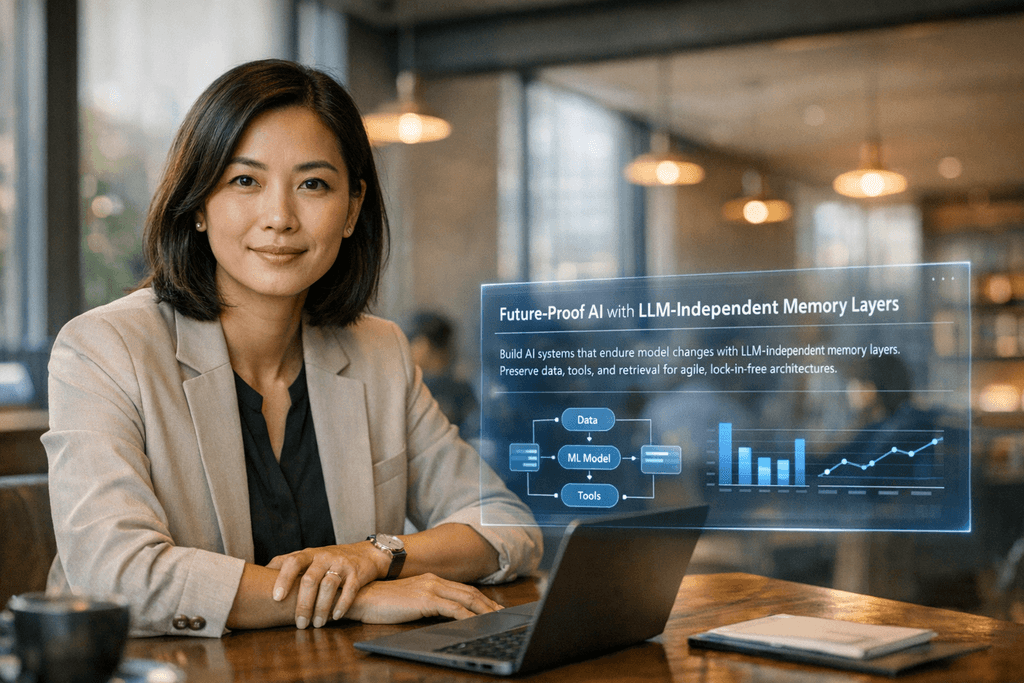
Choose the Right Platform Architecture: Modern agentic cloud platforms provide integrated environments where agents operate with shared context across data, workflows, and systems. Look for platforms that offer transparent decision-making processes with full auditability, support for multiple orchestration patterns, seamless integration with existing enterprise systems, and zero vendor lock-in with complete data export freedom.
Design for Human-in-the-Loop: Even highly autonomous systems benefit from human oversight at critical decision points. Implement confidence thresholds where agents escalate to humans when uncertainty exceeds defined limits. Create approval workflows for high-stakes actions. Provide dashboards that visualize agent performance and decision patterns, enabling continuous refinement.
Implement Robust Governance: Multi-agent systems require clear guardrails to ensure they operate within acceptable boundaries. Define role-based access controls that limit agent permissions to necessary systems and data. Establish business rules that constrain agent behavior to compliant actions. Implement comprehensive logging and audit trails for regulatory compliance and troubleshooting.
Plan for Continuous Learning: The value of multi-agent systems compounds over time as agents learn from outcomes and interactions. Implement feedback loops that capture performance metrics and user corrections. Use reinforcement learning approaches where appropriate to optimize agent behavior. Regularly review agent decisions to identify improvement opportunities and refine orchestration logic.
Measure and Communicate Value: Track concrete metrics that demonstrate business impact including process cycle time reduction, error rate improvements, cost savings from reduced manual effort, customer satisfaction score changes, and employee productivity gains. Share successes broadly to build organizational support for expanded deployment.
What ROI Can Organizations Expect from Multi-Agent Orchestration?
Multi-agent orchestration delivers measurable return on investment across multiple dimensions, with documented case studies showing substantial business impact.
Efficiency Gains Through Parallel Execution: Unlike sequential workflows that process tasks one at a time, multi-agent systems execute multiple activities simultaneously. Organizations report efficiency improvements of 300-400% compared to traditional automation, as specialized agents work concurrently rather than waiting for previous steps to complete. This parallel processing capability becomes increasingly valuable as process complexity grows.
Cost Reduction Through Intelligent Resource Allocation: Multi-agent systems optimize resource utilization by dynamically assigning tasks to the most appropriate agents based on current workload, specialization, and availability. This eliminates the over-provisioning common in traditional automation and reduces infrastructure costs. Companies implementing agent orchestration report 30-50% reductions in operational expenses for automated processes.
Error Reduction Through Validation and Cross-Checking: When multiple agents collaborate on complex tasks, they can validate each other's work and identify inconsistencies before errors propagate through systems. Organizations implementing multi-agent validation report 60-80% reductions in process errors compared to single-point automation approaches.
Revenue Impact Through Faster Response Times: In customer-facing processes, multi-agent orchestration enables real-time responses that would be impossible with traditional automation. Sales teams using agent-orchestrated lead qualification and outreach report 9.7% increases in new customer conversations and conversion rate improvements exceeding 15%.
Scalability Without Proportional Cost Increases: Traditional automation requires additional configuration effort and infrastructure as volume grows. Multi-agent systems scale more efficiently because agents can be replicated and distributed across workloads without redesigning workflows. Organizations report handling 10x volume increases with less than 2x cost growth.
Competitive Advantage Through Innovation Velocity: Perhaps the most significant long-term benefit is the ability to implement new capabilities rapidly. Companies using platforms like Orbitype's Agentic Cloud OS report 4x faster project delivery and 90% reduction in maintenance overhead, enabling continuous innovation rather than being constrained by technical debt.
What Challenges Should Organizations Anticipate?
While multi-agent orchestration offers substantial benefits, organizations must address several challenges to ensure successful implementation and operation.
Coordination Complexity: When multiple agents interact, ensuring they work harmoniously rather than creating conflicts requires careful design. Agents might duplicate efforts, make contradictory decisions, or compete for limited resources. Mitigation strategies include establishing clear protocols and standardized APIs for agent communication, implementing priority-based resource allocation mechanisms, using consensus algorithms for collaborative decision-making, and designing hierarchical structures that provide clear authority chains.
Decision-Making Transparency: Unlike traditional workflows where logic is explicitly defined, agent decisions can appear opaque, making troubleshooting and compliance verification challenging. Organizations need systems that provide comprehensive logging of agent actions and reasoning, visualization tools that map decision flows and agent interactions, explainability features that articulate why specific actions were taken, and human override capabilities for critical processes.
Performance Monitoring and Optimization: With multiple agents operating simultaneously, identifying performance bottlenecks and optimization opportunities becomes more complex than with linear workflows. Effective monitoring requires real-time dashboards showing agent utilization and task completion rates, anomaly detection systems that flag unusual patterns or degraded performance, simulation capabilities for testing orchestration changes before production deployment, and continuous learning mechanisms that improve agent behavior based on outcomes.
Security and Privacy Considerations: Multi-agent systems frequently process and share sensitive information across organizational boundaries, raising data protection concerns. Security frameworks must implement strong encryption for agent-to-agent communication, enforce role-based access controls limiting agent permissions, use federated learning approaches that improve models without exposing raw data, and maintain comprehensive audit trails for compliance verification.
Change Management and Skill Development: Shifting from traditional automation to multi-agent orchestration requires new technical skills and organizational mindsets. Success factors include training teams on agent design patterns and orchestration concepts, starting with pilot projects that demonstrate value before broad deployment, establishing centers of excellence that develop best practices and provide support, and communicating transparently about how agents augment rather than replace human workers.
The Future of Enterprise Automation: Autonomous Agent Ecosystems
The evolution of multi-agent orchestration points toward increasingly sophisticated autonomous ecosystems that fundamentally reshape how organizations operate.
Self-Improving Agent Networks: Future systems will leverage reinforcement learning and continuous feedback loops to optimize their own performance without human intervention. Agents will analyze outcomes, identify improvement opportunities, and refine their decision-making processes autonomously. Early implementations already demonstrate agents that improve accuracy by 15-20% monthly through self-directed learning.
Cross-Company Agent Collaboration: As agent protocols standardize, we will see agents from different organizations collaborating directly on B2B processes. Supply chain agents from manufacturers, distributors, and retailers will coordinate inventory and logistics autonomously. Financial agents will handle inter-company transactions and reconciliations without human intermediaries. This agent-to-agent commerce will dramatically reduce friction in business relationships.
Agent Marketplaces and Specialization: Specialized agents will emerge as services that organizations can deploy on-demand rather than building from scratch. Marketing agencies might offer content generation agents trained on specific industries. Compliance firms could provide regulatory monitoring agents updated with latest requirements. This marketplace dynamic will accelerate adoption by reducing implementation barriers.
Ambient Intelligence Integration: Multi-agent systems will increasingly operate as ambient intelligence that pervades organizational operations invisibly. Rather than discrete automation projects, agents will form a continuous intelligence layer that monitors, optimizes, and executes across all business processes. Employees will interact with this layer naturally through conversational interfaces and intelligent assistants.
Human-Agent Collaboration Models: The relationship between human workers and AI agents will evolve from supervision to partnership. Agents will handle routine execution while surfacing insights and recommendations that inform human strategic decisions. Humans will focus on creativity, relationship-building, and complex judgment while agents manage operational details and data processing.
Organizations that embrace multi-agent orchestration now position themselves to lead in this emerging landscape. The competitive advantage goes to those who develop expertise in agent design, orchestration patterns, and human-agent collaboration models before these capabilities become table stakes for business operations.